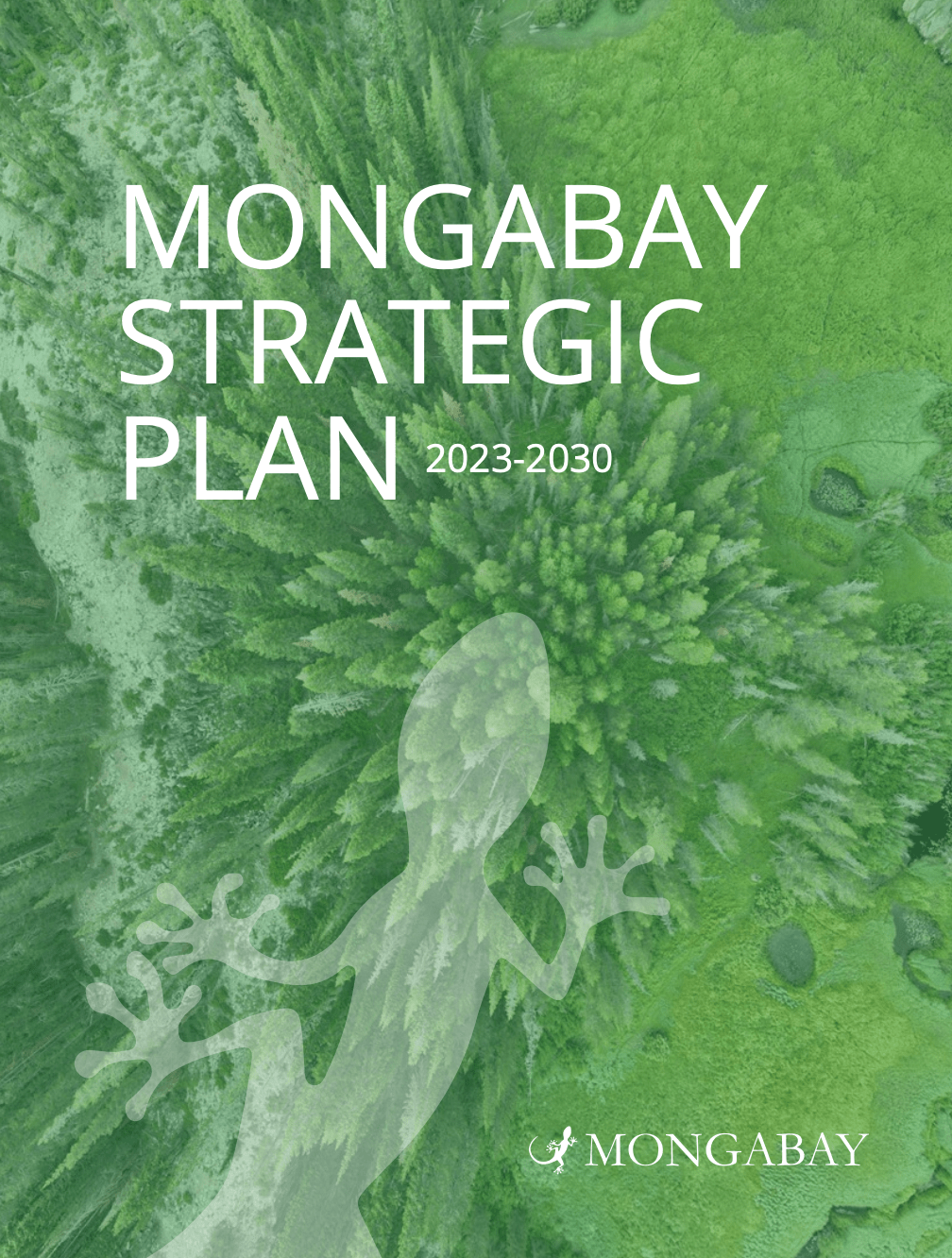
Mongabay, an international NGO focused on planetary issues, hired us to develop a new strategic and its accompanying implementation plan. This was a highly participatory, collective, and transparent approach that:
- Directly employed the knowledge and wisdom of a wide range of staff and some external stakeholders in developing the strategy.
- Created an open path to collective action through active participation in sense-making and strategy development and defined a shared vision for change.
- Strengthened relationships, dialogue and shared understanding among staff that will continue beyond the strategy development.
- Created promising conditions for the dissemination and use of the strategy.
- Introduced a RACI (an inter-accountability mapping tool) framework to help clarify accountabilities across the organization or (if required) within a bureau for the strategy implementation plan.
Here are my main lessons learned:
1. Creating a working group and an advisory group is essential
The strategy was conceptualized, facilitated, and drafted by a working group composed of Yulye Jessica Romo Ramos (Nexus director), Rhett Butler (CEO, Mongabay), Willie Shubert (Global Program Director, Mongabay), and Alana Linderoth (Senior Program Associate, Mongabay). The group was ultimately responsible for the strategy and its process.
Having a working group with senior people from the organisation was essential for me to ensure that:
- We adapted the strategy development process and methods in line with their organisational culture and values – demonstrating respect and sensitivity at a time of change.
- We used language that people could relate to, which increased clarity and engagement with content produced as well as opportunities for meaningful and constructive feedback.
- We created spaces where staff from all over the world, from a wide range of functions and seniorities, could directly engage with senior staff at Mongabay during the process – creating two-way communication channels and rapid feedback loops.
Moreover, the work group engaged the help of a diverse advisory group to challenge, validate and ultimately create ownership of the strategic plan. This allowed us to test ideas, to understand where friction and concerns were arising and how these could be addressed.
I focused on ensuring people felt safe and were providing candid feedback. I also prioritised management response and follow up as needed – furthering transparency, accountability and trust during the process.
2. You need to invest in people during the process
A big part of the strategy development process was to ensure everyone had an equal opportunity to meaningfully engage. This included:
- Having an all-hands staff session to launch the strategy development process and walking people through the detailed approach, principles, timelines and other relevant information.
- Preparing reading content to ensure staff could understand where the organisation was, its current performance and where evidence points towards.
- Facilitated group discussions. We used quite a bit of time during these sessions to expand on key pre-reading insights and answering questions before asking people to provide suggestions and feedback for the new strategy.
My focus here was to ensure people felt genuinely informed and enabled to step up and participate in the process – valuing all types of insights, from very technical and personal to strategic and contextual. This allowed us to identify best and most promising practice from different pockets across the organisation and to co-create an implementation plan alongside each strategic objective discussed.
3. Engaging external stakeholders is very useful
I conducted a series of interviews with external stakeholders, including some partners, professional networks and even ‘competitors’. This was very useful to:
- Test the new vision and mission for tone and use of language
- Sense-check that we were not missing major opportunities and threats during the strategy development process
- Discuss any relevant opportunities for collaboration based on shared strategic objectives.
Overall, I think this was a good example of a human-centred organisational design and strategy development practice. Read this blog for more information on DEI and human-centred organisational design practice.
 Nexus Evaluation LTD